
Some travel stories sparkle with scenic views and sweet serendipities. Others? They slap you awake with panic, breathlessness, and the unmistakable sound of your heartbeat galloping in your ears. This is one of those stories—the kind that leaves you gasping, laughing, and oddly grateful for the drama.
Our return trip from Suzhou to Shanghai that afternoon was supposed to be uneventful. We had already passed through the security checks at Suzhou Railway Station, known for its clean, modern layout softened by touches of old Jiangnan charm. Tickets in hand, with confidence in our stride, we made our way to the platform where our train—an old-school long-distance one, not the sleek bullet kind—was scheduled to pick us up.
We took the normal train because we just wanted to take our time. It’s a slower ride compared to the bullet trains, but that was fine with us. Sometimes it’s nice to enjoy the views, take the scenic route, and travel a little more simply. It just felt like the right pace for the day, and it fit our schedule, so it worked out.
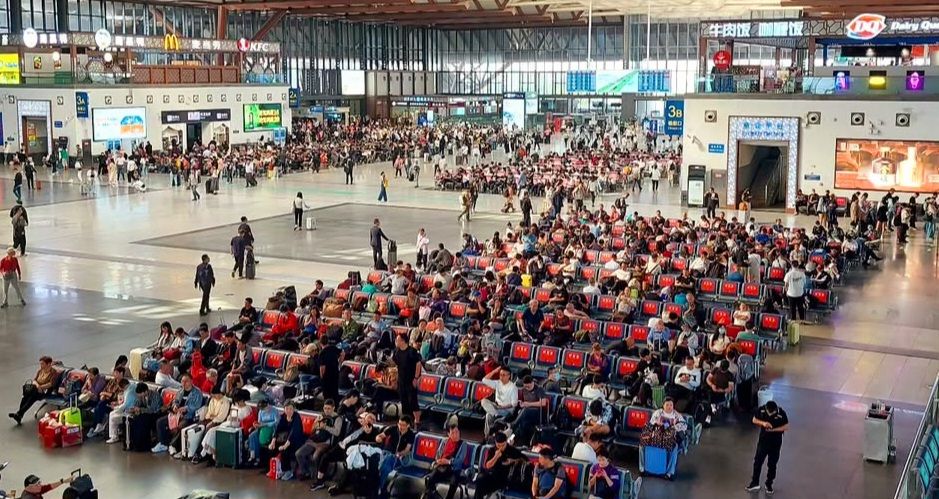
On the platform, everything felt orderly. The sun was just beginning to soften, casting golden light on the steel tracks. The digital board glowed gently with train details, and travelers stood neatly beneath signs that matched their assigned car numbers. Two elderly Chinese men standing beside us asked in Mandarin if they were in the correct line. We exchanged glances, and pointed to the matching digits on the platform edge, we nodded confidently. So far, so good—or so we thought.
The moment the train pulled in, the vibe shifted from Zen to chaos. We realized, to our horror, that we were standing at the wrong end of the platform—our coach was on the farthest opposite side. We became unwilling sprint contestants with exaggerated arm swings and uneven breathing. If this had been part of a travel guide, it would’ve been listed under “Navigating Chinese Train Platforms at the Speed of Mild Panic.”
Let me say this: Chinese trains, especially the older long-distance ones, are extremely long. We’re talking possibly 20 cars or more. (Erm… I may have gotten a little carried away with that. Just a tiny bit. 😅) Imagine discovering your seat is a full football field away—with a strict boarding window of a few short minutes. Add a sea of humans, some towing babies and wheeled luggage, and you’ve got a full-blown obstacle course.
What followed was part comedy, part cardio nightmare. My ever travel buddy was weaving between passengers, dashing under signs, arms pumping like a determined athlete in a sports fest. I, on the other hand, was half-running, half-flailing, desperately trying not to cry or collapse. My heart was pounding louder than the boarding gate announcement echoing through the station. Every step felt like it took forever. My brain was running laps:
What if I get left behind?
What if I board the wrong coach?
What if I can’t explain myself—my Mandarin is limited to “hello” and “thank you”!
Am I about to end up in Inner Mongolia purely by accident?
The panic was real, and so was the dramatic mental soundtrack playing in the background.
The two Chinese elderly men were still with us—sprinting like unlikely marathoners, gripping their tote bags as if their lives depended on it. It was the most chaotic, oddly synchronized, four-person dash I’ve ever been a part of. We didn’t speak the same language, but in that moment, we were one team: Team “Wrong Row, Must Run.”
When I finally reached our coach, my ever travel buddy was already waiting at the door, holding it like a train conductor. I stumbled in and collapsed into our seats like survivors of a very unathletic quest. I let out a sound—somewhere a melodramatic soap opera gasp—that perfectly captured my spirit leaving my body in protest. But my lungs weren’t done with the drama yet. They launched into a coughing fit so extra, it deserved its own closing credits. I was red, gasping, sweating buckets, and close to needing CPR. The two elderly Chinese men joined a moment later, both bent over and breathing like they’d just finished the Suzhou Marathon.
We didn’t speak, but we exchanged exhausted smiles. Survivors of the Suzhou Sprint!😆
Later, when the train began to glide away from the platform and my breathing finally returned to normal, I stared out the window and chuckled. What felt like chaos a few minutes ago had transformed into one of those hidden travel gems—an unplanned, unforgettable moment that bonded us with strangers and reminded me that misadventures often make the best memories.
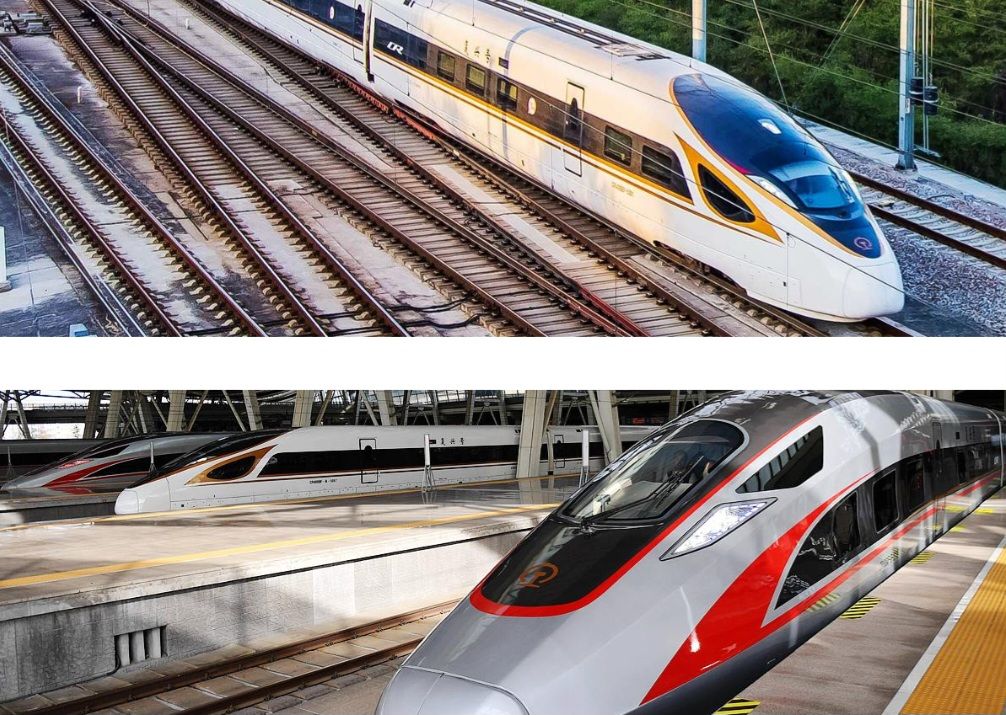
🎒 Train Sprint Survival Guide — For the Unwitting Runner
1. Double, triple check your car number location.
In China, train cars are very specific. The signs on the platform tell you exactly where your coach will stop. Always match the platform markings to your coach number.
2. Travel light.
If you’re going to (accidentally) sprint 400 meters, rolling a massive suitcase will turn it into a personal bootcamp. Consider backpacks or compact luggage with smooth wheels.
3. Know the boarding rhythm.
Normal Trains may only stop for a few minutes. Bullet trains? Even faster. Once the door closes, it’s gone. Plan like you’re boarding a spaceship.
4. Wear comfortable shoes.
Stylish is great—until you’re running like your passport depends on it. Opt for breathable sneakers or shoes that love a bit of cardio.
5. Laugh. Always.
Whether you make it or not, whether you cough like a smoker’s lung or get helped by kind strangers, find the humor. It’s half the joy of travel.😊
🧧 Cultural Sidebar: Platform Precision in China
Train travel in China is fast, affordable, and impressively efficient—but it also demands a level of precision that might surprise newcomers. Unlike in some countries where passengers casually wait anywhere along the platform, Chinese railway stations operate with near-military coordination. Each train car is matched to a clearly marked section on the platform, and passengers are expected to queue at their designated spot.
Miss your mark, and you could end up sprinting the length of the train—a chaotic dash that’s both stressful and unforgettable.
These markings aren’t just for show. They’re essential for managing the massive volume of daily travelers and ensuring smooth, timely boarding. If you’re new to this system, here’s what you need to know:
- Check your ticket carefully: It lists your train number, departure time, and—most importantly—your car number and seat assignment.
- Look down and around: Platforms are marked with signs and painted lines indicating where each car will stop. Match your car number to the corresponding section.
- Arrive early: Boarding usually begins 10–15 minutes before departure, and gates close a few minutes before the train leaves. There’s no such thing as “fashionably late” at a Chinese train station.
- Follow the crowd—but verify: Locals know the drill, but don’t assume they’re headed to the same coach. Always double-check the signage.
- Travel light, if possible: You might need to move fast, and elevators or escalators can be crowded—or far from your gate.
This system applies throughout China—from sprawling metropolises to smaller regional hubs. The standard of precision is consistent across the country’s extensive high-speed and long-distance rail network.
Now here’s where it gets interesting: this level of precision applies to long-distance and intercity trains, like the high-speed rail system—but not to metro or subway lines.
🛤️ Metro/Subway vs. Long-Distance Trains
The metro system is much more relaxed. You can wait anywhere along the platform, and there are no assigned cars or seats. While there are queue lines and boarding etiquette (like letting passengers off before getting on), you won’t need to match your position to a specific train car. Just hop on and find a spot.
So while both systems are modern and efficient, the metro is casual, while long-distance trains are all about precision.
It’s a small detail that makes a huge difference—or in our case, a difference of 400 meters, one dramatic run, and a memory we’ll never forget.
Next time you’re on a platform in China, check your car number… or stretch like you’re about to run the 100-meter dash. You never know when a train might turn into your next favorite misadventure.
✨ Disclaimer:
This blog post is based on a real (and slightly chaotic) throwback travel experience. Details are drawn from memory—and a mildly panicked heart rate—so timelines and platform distances may be slightly exaggerated for storytelling flair. This tale offers a glimpse of what once was: a personal story meant to entertain, not serve as an up-to-date travel guide. Always check the latest train routes, schedules, and boarding procedures before setting off on your own journey.

 The Quiet Chocolate Path