
Sometimes Tokyo roars.
But then, sometimes it exhales—softly, sacredly—and hands you a forest.
Meiji Jingu is one of those places you find yourself coming back to. No matter how many times you visit Tokyo, it somehow calls you back. The moment you step onto the shrine grounds, the noise fades. Everything slows down. It’s calm, grounding, and quietly powerful—like a reset button you didn’t know you needed.
That’s exactly what it feels like when you walk through the towering torii gate of Meiji Jingu, the Shinto shrine tucked right next to the electric energy of Harajuku. One moment it’s rainbow crepes and cosplay; the next, it’s gravel underfoot, cypress overhead, and an oddly perfect kind of hush.
History, Rebirth, and a Forest That Learned How to Breathe
Dedicated in 1920 to Emperor Meiji and Empress Shoken, who helped usher Japan into the modern era, Meiji Jingu was destroyed during World War II and lovingly rebuilt in 1958. It stands not only as a religious site but as a symbol of quiet resilience—a lesson in how even sacred things can be broken and reborn.
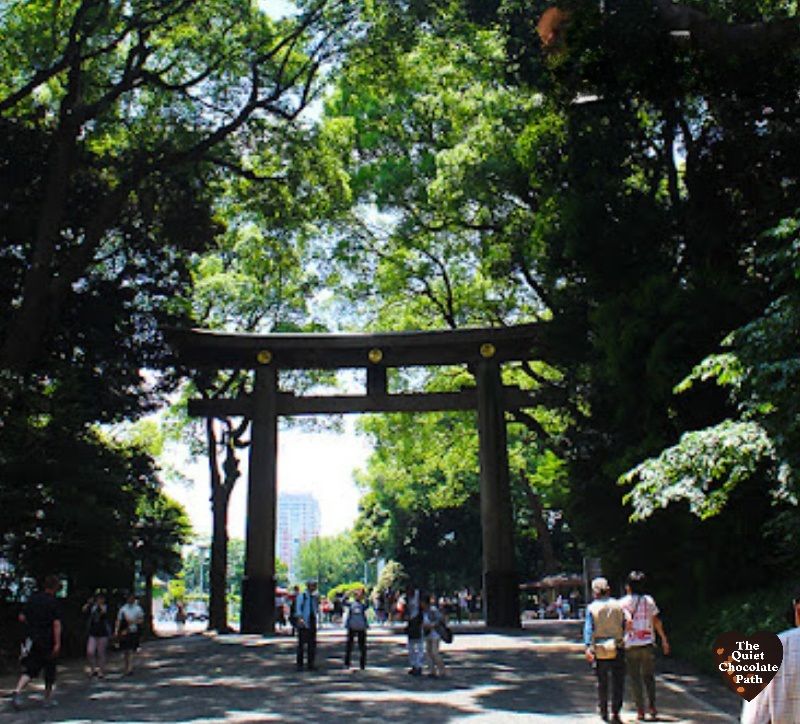
The first thing you’ll notice is the towering 40-foot-high (12-meter) Torii gate at the entrance, made from 1,500-year-old cypress. It was modeled precisely after the original built in 1920. It doesn’t just say “this way to a shrine.” It says, “quiet your thoughts—you’re entering something timeless.”
Surrounding the shrine is an astonishing 200-acre man-made forest, created from over 100,000 trees donated from every corner of Japan. Somehow, this planned grove matured into a genuine wilderness. It’s like Tokyo planted a deep breath right in its chest.
Sake, Wine, and a Toast to Tradition
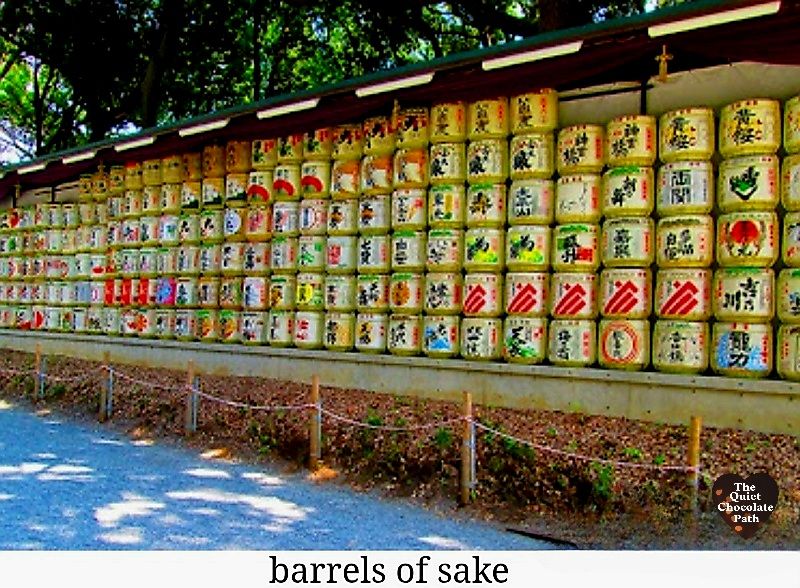
As you walk along the path toward the main shrine, one of the most eye-catching sights is the long row of colorful sake barrels, stacked neatly and almost artfully. These are called kazaridaru—decorative barrels offered by sake brewers from all over Japan. While they’re empty, they represent a sincere gift to the shrine, offered as a way to honor the deities and express gratitude for prosperity, health, and blessings. Sake has always played a major role in Shinto rituals, often used in ceremonies as a sacred offering called omiki. It’s not just tradition—it’s a spiritual toast.
Directly across the path, you’ll spot something a little unexpected: a set of Burgundy wine barrels from France. These were donated by wineries in the Burgundy region to commemorate Emperor Meiji’s appreciation of Western culture, especially French wine. He was known for embracing modernization during the Meiji era—including Western clothing, food, and customs—while still valuing Japanese heritage. The wine barrels serve as a cultural bridge and symbol of Japan’s openness to the world during one of its most pivotal historical periods.
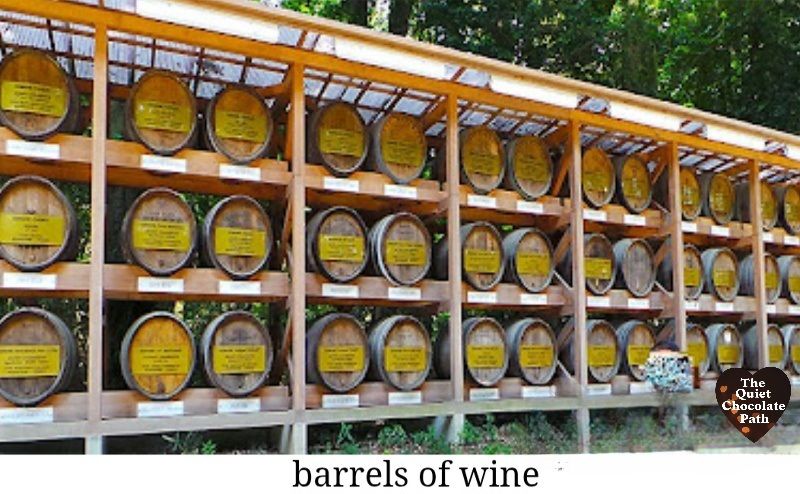
Together, the sake and wine barrels feel like a visual conversation between East and West—Japan’s spiritual roots on one side, and its forward-looking global embrace on the other.
Cleansing the Chaos Before Entering the Sacred
Near the entrance of the main shrine, I found myself drawn to the temizuya, a water ablution pavilion where visitors perform a symbolic purification. I was so curious, I paused to watch others first—then eagerly joined in.
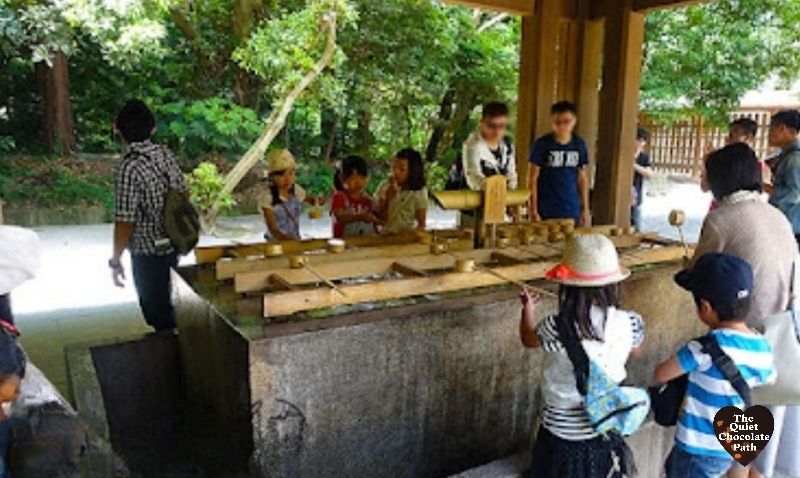
I dipped the ladle into a communal stone basin, rinsed my hands, and poured a little water into my palm to cleanse my mouth before approaching the main hall. For a first-timer, it’s one of those uniquely Japanese experiences that feels quietly profound—and definitely not to be missed.
There’s no rush here. Just a graceful pause. A chance to rinse off distractions, ego… or even the stress of navigating Harajuku crowds. It really does feel like a soft spiritual reset.
A Quiet Moment at the Main Hall
As you approach the heart of Meiji Jingu, you’ll come across the Haiden, or the main offering hall, where most visitors pause to bow, clap twice, and quietly make a wish. Just behind it—though not accessible to the public—is the Honden, the shrine’s innermost sanctuary. This is where the spirits of Emperor Meiji and Empress Shoken are enshrined. The architecture is simple and elegant, made from Hinoki (Japanese cypress), and built without nails—a traditional method used in shrine construction. Even though you can’t enter the Honden, just standing near it feels like brushing against something sacred and timeless.
The atmosphere around the main hall is surprisingly calm for such a significant spot in Tokyo. You’ll often find people standing in quiet reflection, dropping coins into the offering box, or writing their prayers on ema wooden plaques nearby. Unlike some temples that feel grand or imposing, Meiji Jingu’s main hall area is open, spacious, and intentionally humble—reflecting the Shinto belief in harmony with nature. There’s no over-the-top decoration, no blaring chants. Just the soft rustle of trees, the echo of footsteps, and the occasional caw of a crow watching from above.
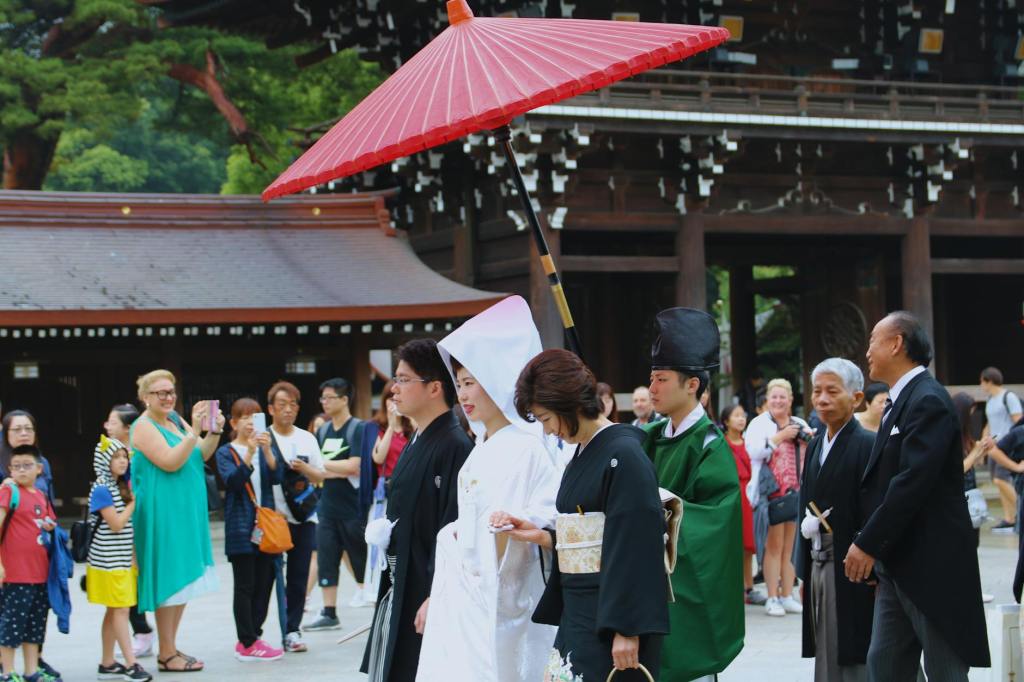
If your timing’s “lucky,” you might walk straight into a traditional Shinto wedding—complete with priests, white kimono, and a quiet crowd of startled tourists realizing they’ve photobombed someone’s sacred moment. Oops.
We also noticed a few Shinto staff quietly walking the corridors. The women in particular stood out with their flowing white tops and striking red hibakama (a traditional divided skirt). Their presence was subtle, respectful, and added to the whole serene atmosphere.
Ema, Wishes, and the Price of Hope
Under the shade of two massive ancient camphor trees, we spent a while observing people writing their hearts out on ema—those wooden prayer plaques hung on wall hooks. Some were solemn. Some, sweet. A few were outright hilarious. (We may or may not have seen one praying for K-pop concert tickets.)
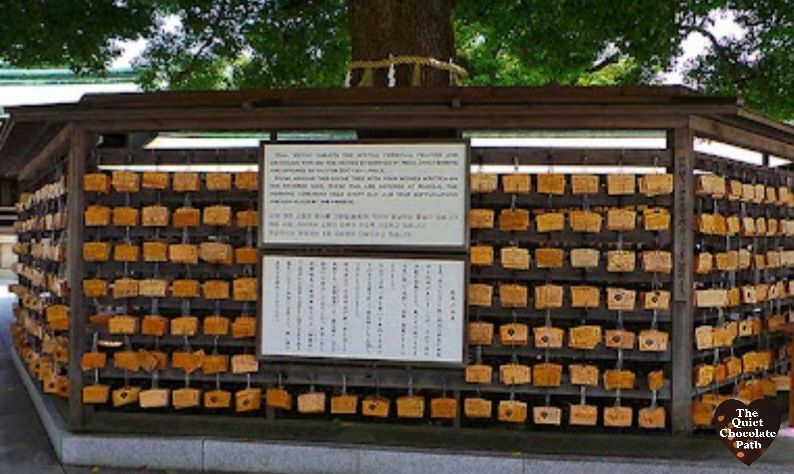
Each plaque costs 500 yen and you can buy them right there. All the wishes written on them are offered during Mikesai, the morning ceremony, where priests convey all supplications on behalf of the visitors. It’s a beautiful merging of personal hope and communal ritual.
A Little Shopping for Your Soul (and Luck)
There are also a few small shops in the area selling charms, amulets, and talismans—from safe childbirth to exam success, to general good fortune. Each one feels thoughtfully designed, and the variety is impressive without being over-commercialized.
What Shinto Means, Quietly
Meiji Jingu is a Shinto shrine. Shinto is Japan’s indigenous religion—one without a founder, a holy book, or even the idea of conversion. Instead, it centers around a deep reverence for nature, seasonal rituals, and core values like “magokoro” (a sincere heart).
You don’t have to be religious to feel the sacredness here. It just kind of seeps in as you wander beneath the trees.
A Big Place for Small Moments
This place isn’t swarmed by tourists, which is part of the magic. We had the freedom to walk slowly, sit under trees, and just be for a while.
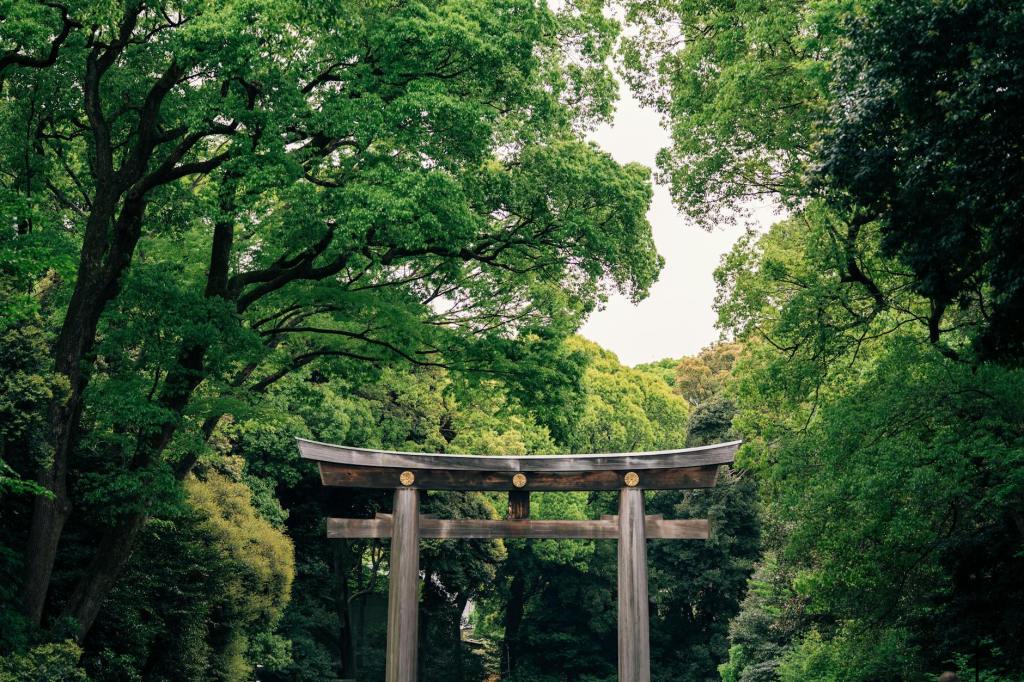
With over 100,000 towering trees, the whole space feels calming and cool, even on hot summer days. And yes—it’s big. Like really big. So if you’re visiting, wear comfortable shoes and give yourself time to get a little gloriously lost.
Admission: Free to enter the shrine grounds. Some inner areas may charge a small entrance fee.
Address:
Meiji Jingu Shrine
1-1 Yoyogikamizonocho, Shibuya,
Tokyo 151-8557, Japan
Takeaway: The Quiet Places Are Still Speaking
Meiji Shrine invites you to slow down and cleanse—not just your hands, but your mental inbox, emotional clutter, and self-expectations. It whispers that it’s okay to not be impressive for a while. To just be present. Maybe even a little lost in the trees.
Because in a city designed for speed, stillness is rebellion. And at Meiji Jingu, it’s also sacred.
So till next time… toodles. ✨The Quiet Chocolate Path

 The Quiet Chocolate Path