
In Tokyo, where neon lights rule and silent train rides feel like meditation, there’s one place where tradition, tourism, and the divine all collide—Sensoji Temple. Nestled in the old-world charm of Asakusa, this isn’t just a stop on your Tokyo checklist—it’s a spiritual heartbeat wrapped in street food, incense smoke, and centuries of devotion.
With over 30 million visitors a year, Sensoji Temple isn’t just Tokyo’s most visited temple—it’s Japan’s most visited spiritual site. But why does a 7th-century Buddhist temple attract more visitors than Shibuya’s scramble crossing or any modern-day marvel?
🌸 A Legend Born by the River
Sensoji’s origin reads like a page out of a myth. In 628 AD, two brothers fishing along the Sumida River pulled up something strange—a small golden statue of Kannon, the Bodhisattva of Compassion. No matter how many times they returned it to the water, the statue kept coming back. Clearly, the universe had plans.
By 645 AD, a temple was built to enshrine the statue, making Sensoji the oldest Buddhist temple in Tokyo. And while the original structure has weathered fires, earthquakes, and the ravages of WWII, it has always risen—rebuilt, revered, and bustling with faith.
⛩ Kaminarimon – The Gate That Launches a Thousand Selfies
Before you even set foot inside the temple grounds, you’re greeted by the Kaminarimon or “Thunder Gate.” Massive, red, and dramatically photogenic, it’s guarded by fierce statues of the gods of wind and thunder—because nothing says “welcome” like a deity with lightning in hand.
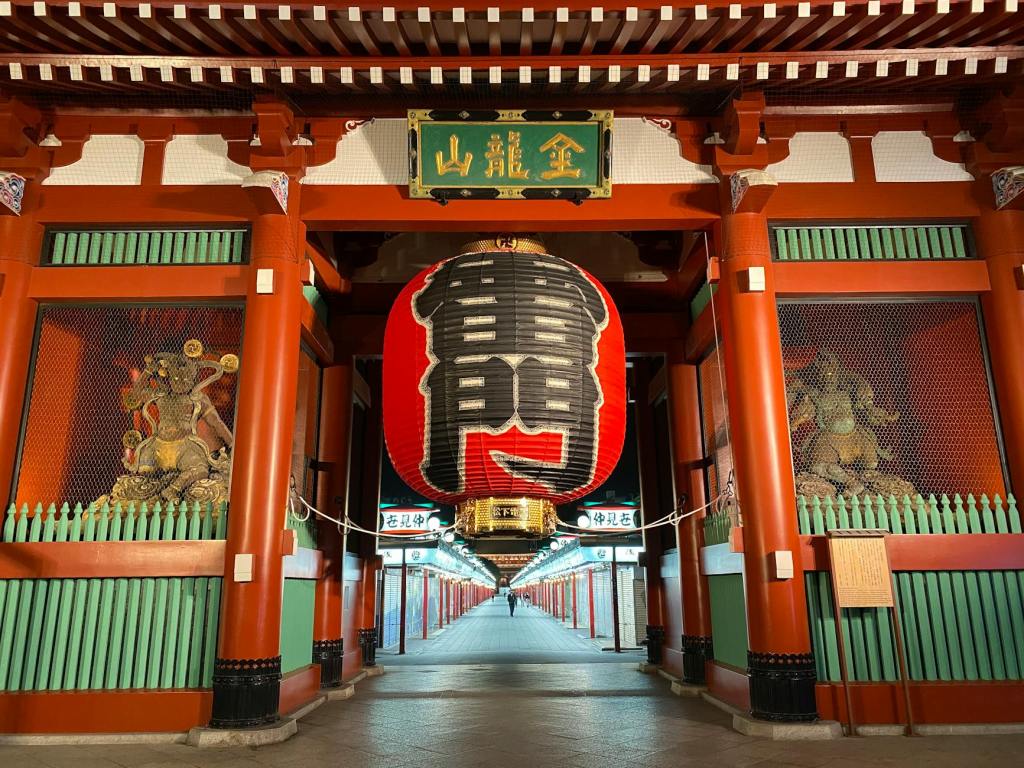
Hanging from the gate is Tokyo’s most iconic lantern—a giant red paper beacon that draws smartphones like moths to flame. Snap away; you’re part of a long tradition of gazing upward in awe.
🍡 Nakamise Street
Beyond the Thunder Gate lies Nakamise-dori, a 400-meter stretch of traditional stalls that dates back centuries. Lined with shops selling everything from ningyo-yaki (red bean-filled sponge cakes) to samurai magnets and matcha ice cream, this colorful corridor is more than a souvenir stop—it’s an experience.
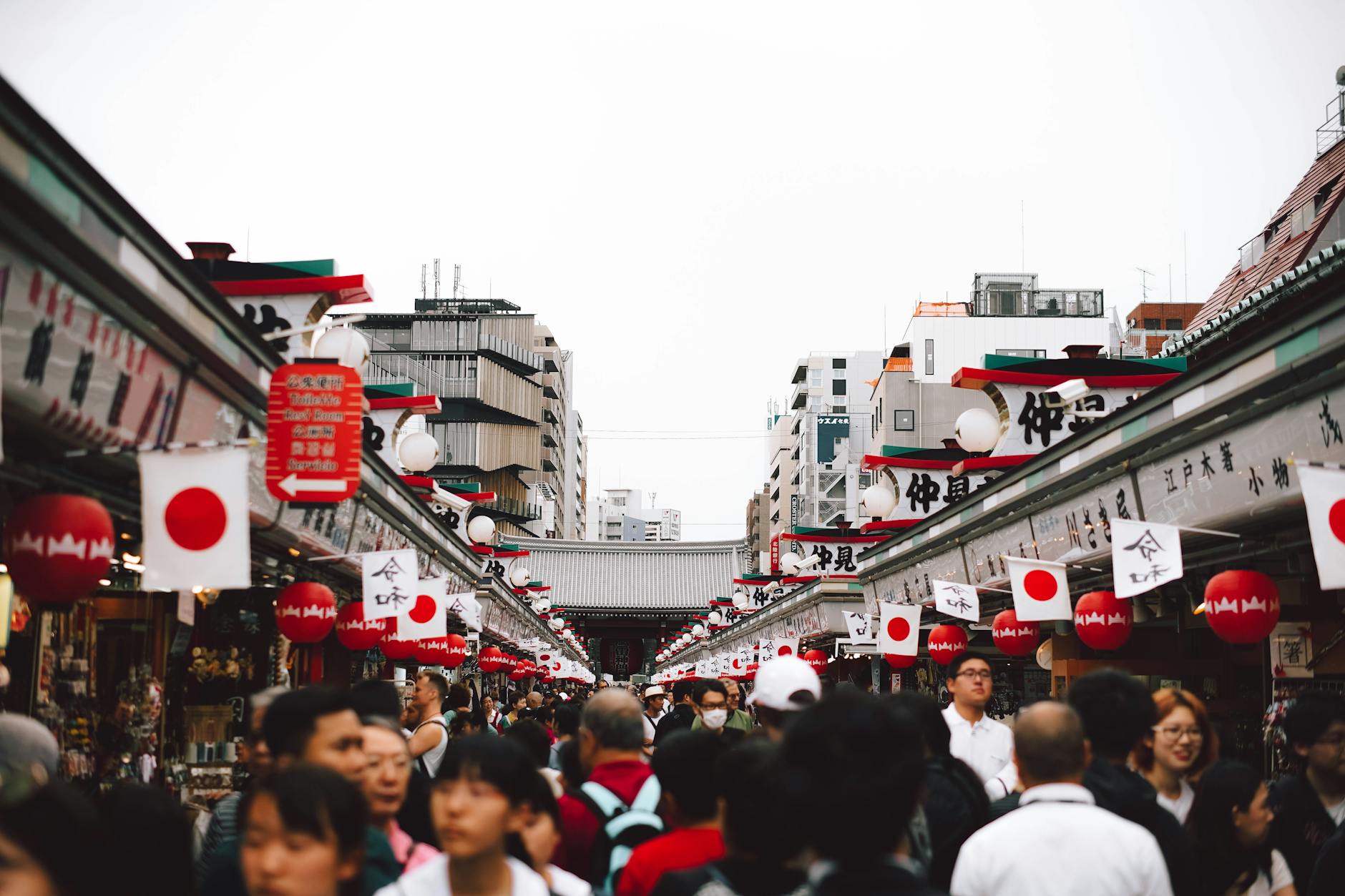
The best part? It’s a sensory transition zone. You’re not just shopping; you’re slowly shifting from the outside world to something more sacred—without having to give up snacks.
🕯 Incense, Rituals & That Sweet Smell of Spiritual Febreze
Once you near the Main Hall (Hondo), you’ll encounter two key rituals:
- Chozuya Fountain – Wash your hands and rinse your mouth as a symbolic purification.
- Jokoro Incense Burner – Stand in the smoky cloud of centuries-old belief and waft the healing smoke onto your head, shoulders, or wherever you need a little divine TLC.
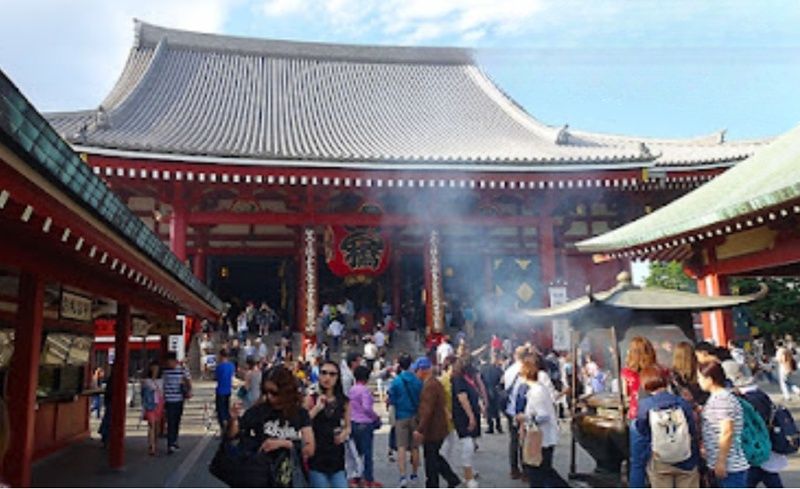
This may sound like a solemn act, but it’s actually quite lively. Think of it as spiritual Febreze—refreshing, mysterious, and somehow reassuring.
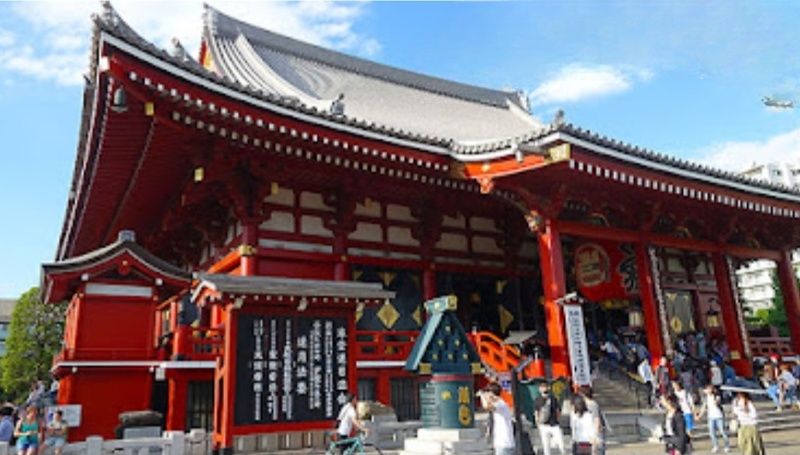
The main hall of Sensō-ji Temple is called the Hondō (本堂), which simply means “Main Hall” in Japanese. It houses the temple’s principal deity, Kannon Bosatsu (Avalokiteśvara), the Bodhisattva of Compassion.
Inside the main hall, coins clink into offering boxes, wishes are whispered, and prayers float up like smoke. It’s a blend of reverence and real-life requests—from health and happiness to more relatable hopes like “no more overtime.”
🧧 Omikuji Fortunes
Sensoji’s omikuji (paper fortunes) are legendary—not for their generosity, but for their honesty. Draw a stick, match the number, get your fortune.
- Good fortune? Keep it and count your blessings.
- Bad fortune? Tie it to the designated rack and leave your misfortune behind, literally.
It’s a little dose of Buddhist humility—and yes, the bad fortunes are surprisingly common, but that’s all part of the charm. (You’re not unlucky—just spiritually humbled.)
🏯 The Gojunoto Pagoda & The Unexpected Encounters
Nearby, don’t miss the elegant Gojunoto, a five-story pagoda reaching gracefully into the sky. This architectural beauty isn’t just for photos; it represents the five elements of Buddhist cosmology—earth, water, fire, wind, and sky.

Inside the temple, you’ll also find lucky bracelets, charms, and protective amulets—thoughtful souvenirs for friends, or a tiny piece of Tokyo’s spirit to take home.
And sometimes, if the universe is feeling playful, you might even bump into a group of Sumo wrestlers passing through Asakusa—just like we did. They were kind enough to pose for photos. Moments like that? You can’t plan them—they just happen at Sensoji.
🎌 A Place Where Reverence Doesn’t Whisper
Sensoji Temple is loud. It’s busy. It’s crowded. And yet, it is deeply spiritual. The rituals are real, the prayers are genuine, and the connection—whether you’re a local or a first-time visitor—feels surprisingly personal.
Here, spirituality doesn’t require silence. It lives in the crowd, dances with the lanterns, and walks beside you with every step through the incense-scented air.
✨ Why You’ll Remember Sensoji
Sensoji Temple is many things at once: a cultural landmark, a spiritual sanctuary, a foodie haven, and an open-air museum of Tokyo’s soul.
You’ll come for the photos.
You’ll stay for the feeling.
And maybe—just maybe—you’ll leave with more than a lucky bracelet.
Because at Sensoji, every soul, every selfie, and every sincere wish is welcomed with open gates.
🧭 Quick Travel Tips for Visiting Sensoji Temple
- 📍 Location: Asakusa, Taito City, Tokyo, Japan
- 🕰️ Best Time to Visit: Early morning (before 9 AM) or late evening (after 6 PM) for fewer crowds
- 💸 Entrance Fee: Free
- 📸 Must-See Highlights:
- Kaminarimon (Thunder Gate)
- Nakamise Shopping Street
- Incense Burner (Jokoro)
- Main Hall (Hondo)
- Gojunoto (Five-story Pagoda)
- 🔮 Don’t Miss: Drawing an omikuji fortune—even the bad ones make good stories.
Ready to walk between worlds?
Sensoji Temple isn’t just a place to see—it’s a place to feel, snack, smile, and quietly reflect, even as the crowd swirls around you.
Only in Tokyo. Only in Asakusa. Only at Sensoji.

 The Quiet Chocolate Path