
There’s a gentle kind of flow when someone pours their heart into something – like a blog post written in the quiet of early morning, or a photo taken beneath the warmth of the afternoon sun. So when people brush it off, “That’s AI,” it can feel less like praise and more like a dismissal of your effort. However, it still conveys a message that your work is of such a high level, so impactful, so perfect that it makes it difficult to differentiate between one’s own spark of creativity and the output of an AI.
The cell phone was held, the words typed, the hours spent editing with coffee growing cold on the desk. Yet suddenly, because a tool decided to be suspicious, all that effort is called “fake.”
Here’s the reality: AI detectors are far from perfect. They often mislabel honest, human-made content. Why? Because the line between “edited” and “AI-generated” has blurred. A simple touch-up, a cropped corner, or a smoothed sentence can trick a detector.
Editing is part of life. Almost everyone does it. A dull sky gets brightened. A stray trash can or a random passerby disappears from the frame. Even mobile apps quietly use AI to help with these things. Pressing “remove object” doesn’t just erase—it fills in a spot, blending it naturally with the background. The photo looks better. But sometimes that’s enough for a detector to flag it. A real, captured moment ends up labeled as fake.
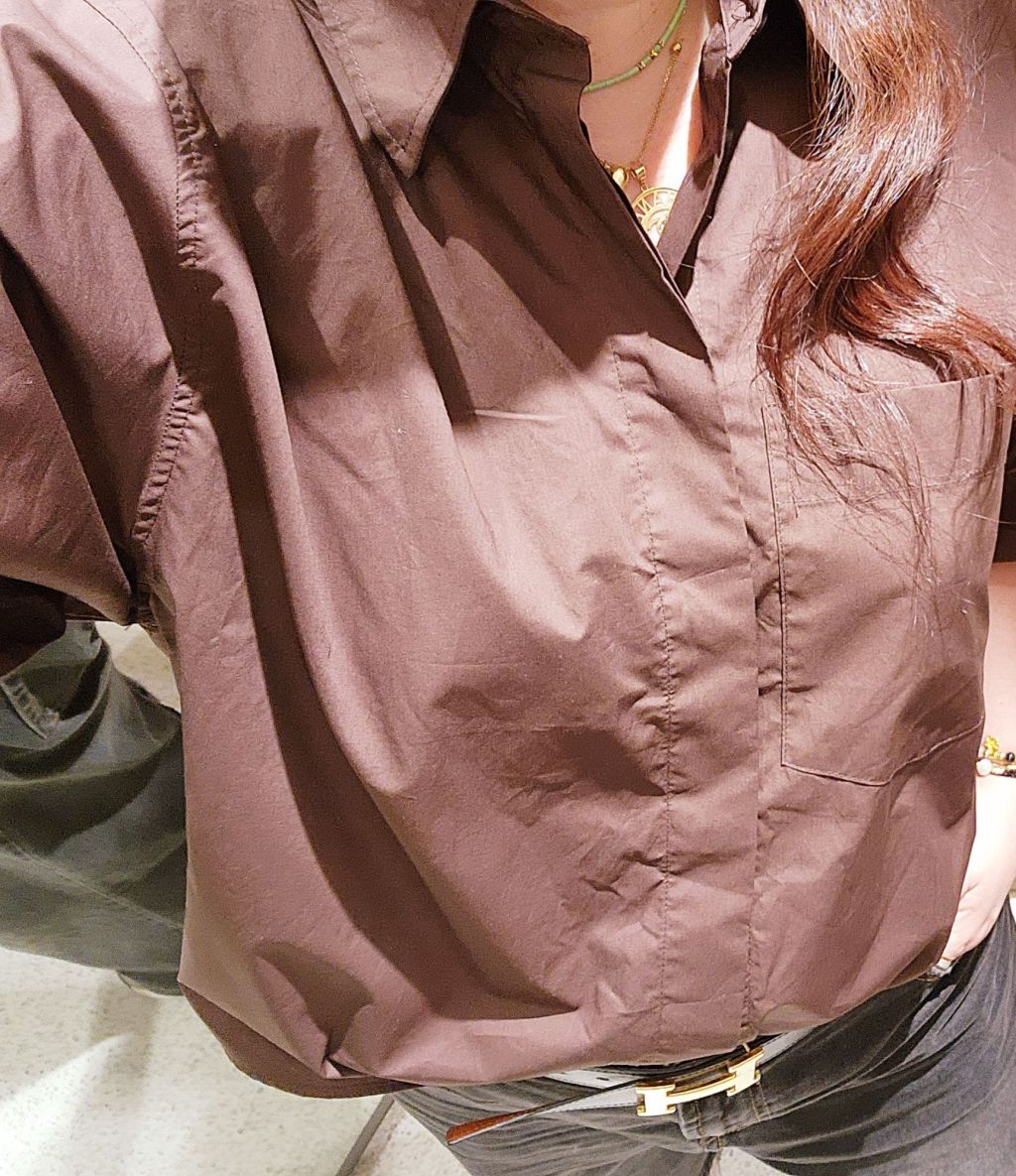
Take this as an example: my original photo above, and the one on the left (below) is completely unedited. The detector indicates that it is “not likely” to be AI-generated, but still gives it a tiny 2% probability. On the right, I uploaded the same photo but cartoonized it using a simple app, and suddenly—boom!—it’s flagged as AI-generated. I even lowered the opacity of it. Why? Because it sees something “generated.” Meanwhile, the person in the photo is 100% real. Not created by AI—just edited or cartoonized. And that’s exactly what makes it so frustrating.
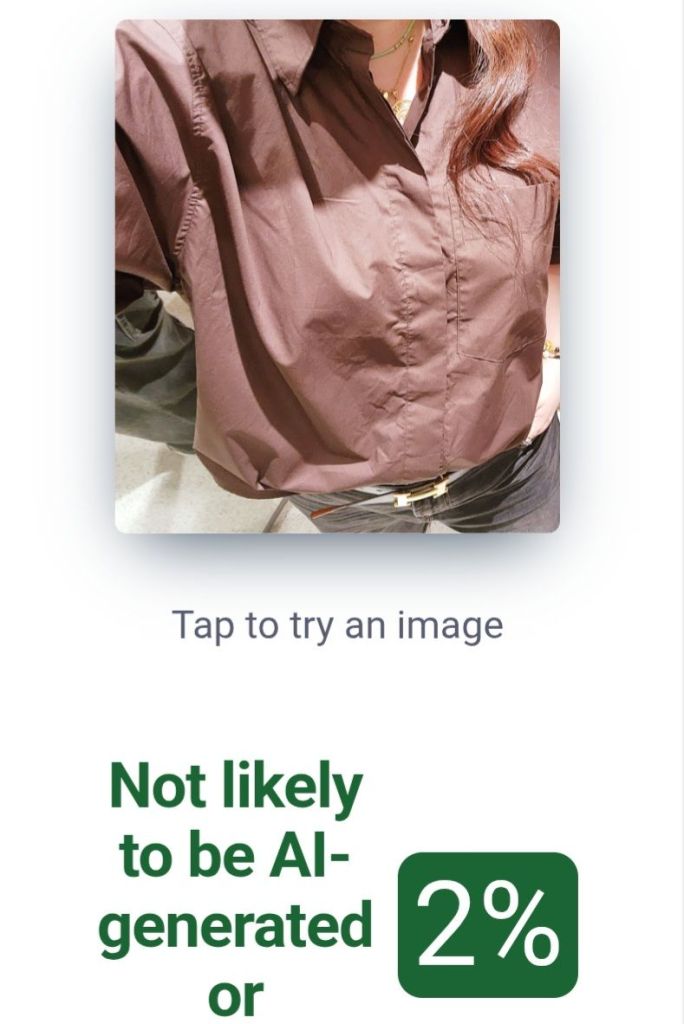
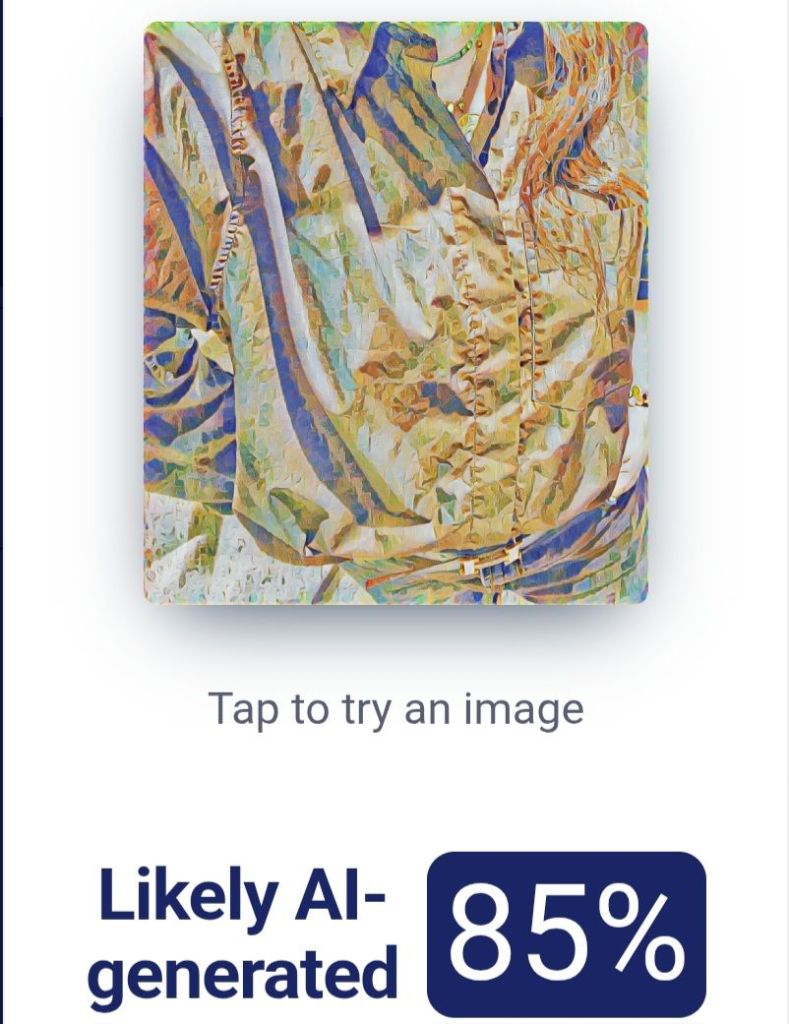
Let’s say some of my selfies get flagged as “AI-generated” label. Which is hilarious, really. Half-human, half-robot? Sounds like a Marvel origin story I never signed up for.
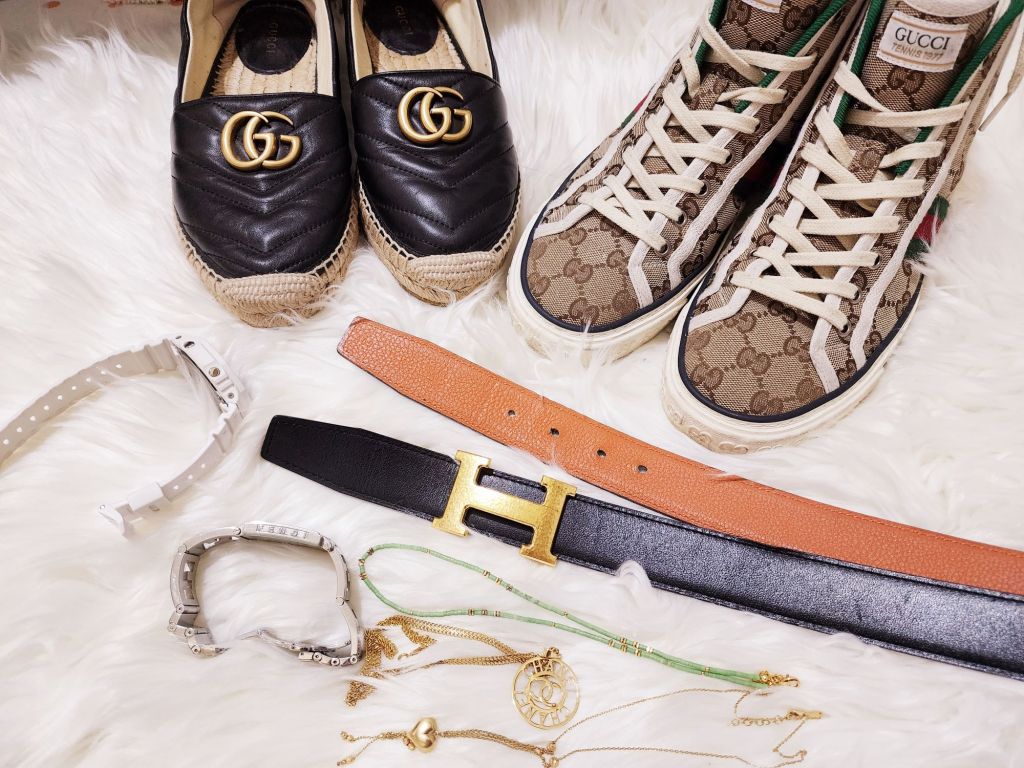
But here’s the thing—look closer. The shoes, the belt, the watch, the necklace… all mine. Bought them, wore them, left them lying around my room. They didn’t just sprout from an algorithm’s imagination. They’re real, tangible, slightly scuffed at the edges.
Can a real photo get mistaken for AI just because you tweak it a little?
Yes, a real photo can get mistaken for AI—even with small edits. Compression and re-encoding can mess with the photo’s fine noise, resizing or upscaling changes pixel patterns, and color or contrast tweaks shift the texture signals. Strip away metadata and detectors lose more of their clues. Even the content type matters: smooth skies and faces tend to trip detectors up more than busy, detailed scenes. Some detectors are strict, others more forgiving, but sometimes just one tiny nudge is enough to make a perfectly real photo look “AI-made.”
Detectors, though, they love drama. A little edit here, a filter there, removing objects there, and suddenly the machine panics. “Ah, yes, AI!” No, just creativity. Just play. Just me, tweaking the dials a bit because why not?
In the end, it’s still my body, my things, my story. Not artificial—just… artful.
Just by making this blog, I stumbled upon something that left me scratching my head: apparently, you can… recreate your own photo. Wait—what? Why would anyone need to do that? I mean, you already have yourself captured perfectly in the original. So what’s the point?
Writing faces the same issue. You polish a sentence, trim the fat, tighten the flow—boom, it’s called “too clean, polished, and concise” As if clarity were suspicious. But that’s not a robot talking; that’s just what good writing does.
The detector doesn’t see what’s underneath. It doesn’t feel like the bumpy jeepney ride on the way to a crowded market. It doesn’t taste the halo-halo dripping faster than you can eat it on a blistering afternoon. It doesn’t know the hush of midnight, when you’re scribbling down thoughts before sleep swallows them.
Those are the fingerprints of being human. The smudges, the sweat, the little imperfections that leak into sentences. A machine might catch the rhythm, sure, but it can’t live the story.
If AI ran the show, posting every single day would be child’s play—no hesitation, no off days, no “ugh, not today” moments. Just smooth, endless output, like a vending machine spitting words. But people aren’t vending machines. We pause. We sulk. There are times when we doubt our abilities, physically destroy the pages we have written, and start anew. On certain days, creativity comes into the room as if it were its owner, whereas on other days, it is hiding under the bed, not wanting to be disturbed. That irregular rhythm – the chaos, the changing moods, the quiet – is not a mistake. It is simply the unique trace of being human.
AI itself isn’t bad. Sometimes it’s the easiest way to create an image or illustration for a topic that doesn’t have a personal photo to match. And I do that. But the stories that matter most—the life reflections, the small daily moments, the memories captured in a photo—those are human. Editing a frame, cleaning up distractions, or adjusting a paragraph doesn’t erase the fact that the experience behind it is real.
People forget AI detectors are just tools. Not mind readers, not truth-tellers. They scan for patterns, crunch probabilities, and call it science. They can’t tell the difference between editing out a lamppost and a program inventing a city from scratch.
And like any tool, they can sometimes fail. Remember when calculators were the classroom villain? Teachers swore we’d forget how to think, yet we still memorized multiplication tables. Detectors are in that same awkward growing-up phase—sometimes useful, often clumsy, rarely the final word.
Authenticity isn’t a flawless pixel or a sentence scrubbed clean—it’s messier, warmer than that. It’s intention. Honesty. The small courage of showing up and tossing something real into the world, not because it sparkles, but because it matters. Sure, photos get cropped, words get polished, filters get slapped on. That’s life. But the heartbeat underneath—the memory, the laugh, the sting, the moment you didn’t want to lose—that’s the part no edit can fake.
Not everything flagged as AI is fake. Not every carefully written post is trying to trick anyone. Sometimes people just want to show the baby who isn’t blinking, the street scene without a jeepney in the way, the thought that came together after hours of reflection. And yes, sometimes the goal in writing is simply clarity. That doesn’t make anyone a robot. It makes them human, attentive, and caring about their work.
And if doubt remains, that’s okay. If AI detectors can be wrong about humans, humans can be wrong about each other, too. Giving someone the benefit of the doubt doesn’t cost anything. A little edit or polish doesn’t erase authenticity. What truly matters is the heart, the story, and the intention behind it.
The funny thing is, even good old academic writing isn’t safe from being tagged as AI. Think about it—essays are meant to be clean, organized, and free of all the “umms” and “likes” we use when we talk. That’s literally the style detectors are trained to be suspicious of. So picture this: a student staying up till 3 a.m., half-asleep, fueled by instant noodles and coffee, carefully polishing their paper… only to be told by some detector that it “sounds too much like a robot.” That stings, right?
And here’s the kicker: even the U.S. Constitution has been flagged. Yep, that Constitution—the one hammered out with quills while powdered wigs were sliding down sweaty foreheads. Because the language is formal, clipped, endlessly recycled in textbooks, detectors sometimes squint at it and whisper, “Machine-made.” Imagine that—one of the most human, history-soaked documents on earth getting side-eyed by a bot. If something that raw, that world-shaping, can be doubted, maybe the flaw isn’t in the writing at all. Maybe it’s in the shiny little tools pretending they know what “human” looks like.
✨ At the end of the day, proof of authenticity isn’t in a machine’s judgment. It’s truly about knowing a person—their values, the way they live, and how they show up day after day. Genuine people, flaws and all, have a way of shining through, no matter what.
Note: I’ve tweaked my writing style here—looser, less polished, with a bit of uneven rhythm, just enough to keep it feeling natural. Still, a few sentences might get flagged just because they look a little too neat on the surface. That happens, even with real writing. But the heart behind it is fully human.


 The Quiet Chocolate Path